By: Eli Engler
The last time that the television industry shut down similar to how it has been shut down now was in late 2007 and early 2008, during the Writers Guild Strike. With the production of just about all television shows suspended due to safety concerns related to the coronavirus, the television industry faces its biggest challenge since 2008. In the upcoming months, with social distancing and other health guidelines still likely to be in place, television producers and executives will face an important dilemma.
First, it is necessary to look at exactly how the coronavirus stopped television production and why these shows had to stop filming. While it is obvious that certain industries, such as restaurants, had to change their business model in order to maintain safety, one might think that television productions would be able to continue to be produced because there are not that many people working on each scene at a given time. However, this is not the case as even small television productions can have hundreds of people working on the show in a small area.
In particular, scripted shows were hit the hardest by these safety concerns. For example, one show that had to stop filming was Law & Order: Special Victims Unit, also called SVU. Filmed in New York City, SVU shut down in March due to the high coronavirus concerns in New York. Showrunner Warren Leight explained why SVU had to shut down. In an interview with Vanity Fair, he said that while shooting courtroom scenes, “we might have 100 extras in there.” He also said that while filming the show in early March, he realized “this is scary” as he considered the potential risks of having so many workers working closely together at one time.

In addition, the danger of the coronavirus to the television industry was shown in a sad story revolving around SVU. In early March, costume designer Josh Wallwork went home early one day as he was feeling sick. He would later die due to the coronavirus, showing how dangerous the coronavirus could be to television productions. If just one crewmember got the coronavirus, they could potentially spread it to hundreds of people, making it an easy decision for Leight to have to shut down production of SVU in March.
Besides scripted cable shows, other television productions were also impacted. For instance, the reality show Survivor was affected by the coronavirus. Survivor’s fortieth season started airing in February and its finale was scheduled for May 13th. Typically, at the end of each season, there is a live Survivor reunion show where all the cast members get together to talk about the season. However, due to the coronavirus, Survivor decided to scrap the idea of a live reunion due to safety concerns.
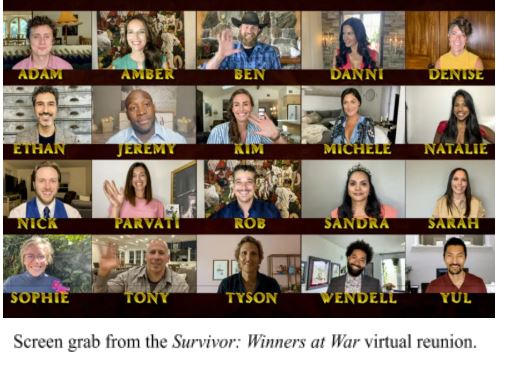
Furthermore, the forty-first season of Survivor was supposed to start filming in March in Fiji. However, production on this season was suspended. In the Survivor season forty reunion show, host and executive producer Jeff Probst said that they are committed to having the next Survivor season on air in the fall. Many fans were skeptical that Survivor would be able to return with all the health and travel restrictions currently in place. One current rumor suggests that season forty-one of Survivor is actually filming right now somewhere in the United States to get around the international travel bans, particularly the one currently in Fiji where Survivor was supposed to film.
Although the shows that were set to film in March and beyond were messed up by coronavirus, many other shows have already been filmed but not released yet. This gives television producers a big decision to make – should they air these shows now in order to fill the holes in their summer schedules or hold onto these shows for the fall, when they potentially may have bigger holes in their schedule they need to fill. This dilemma affects all television producers and executives as they have to choose whether to put out their new content in the summer or the fall.
In an interview with The Hollywood Reporter, a television executive discussed the problems that executives from all networks are facing. The executive said, “Scheduling is about having all the pieces of a puzzle in front of you and how you put them together to generate the highest rating… It’s impossible to do that when you don’t know what all the pieces are.” All television networks now have to address this problem and decide when to air their limited new content.
Overall, the impact of the coronavirus on the television industry has been large. The production of all kinds of shows that were originally intended to be released in the fall has been delayed. Now, networks and producers have to decide when is the best time to release their new content because they may not be able to produce any more in the coming time.
Bibliography
George, Daniel. Screen Grab of Virtual Reunion from Survivor: Winners at War Finale. Fansided, 2020, https://survivingtribal.com/2020/05/14/survivor-winners-war-final-six-favorite-moments/
Goldberg, Lesley. “A Puzzle Without All the Pieces: Broadcast Networks Scramble to Program an Uncertain Future.” The Hollywood Reporter, 7 Apr. 2020, www.hollywoodreporter.com/live-feed/a-puzzle-all-pieces-broadcast-networks-scramble-program-an-uncertain-future-1288828.
Merrett, Robyn. Photograph from NBC’s Law & Order: SVU. People.com, 5 June 2020, https://people.com/tv/law-order-svu-will-address-george-floyd-and-coronavirus-in-new-season/
Porter, Rick. “’Survivor’ Plans Virtual Reunion for Season Finale.” The Hollywood Reporter, 13 Apr. 2020, www.hollywoodreporter.com/live-feed/survivor-plans-virtual-reunion-season-finale-1289993.
Press, Joy. “The Week the Cameras Stopped: TV in the COVID-19 Era.” Vanity Fair, 23 Apr. 2020, www.vanityfair.com/hollywood/2020/04/the-week-the-cameras-stopped-tv-in-the-covid-19-era.
 The Academy Journal for Global Affairs