By: Ethan Donovan
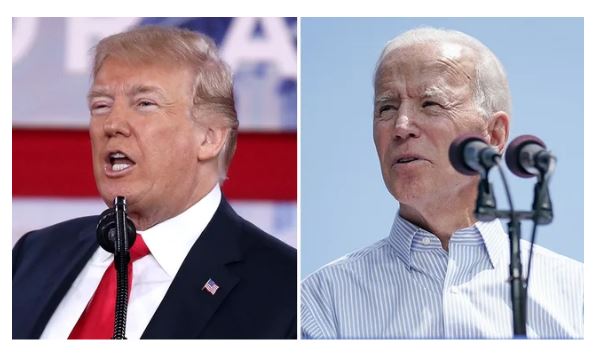
If you have watched the Youtube ads of presumptive Democratic Presidential nominee Joe Biden telling us the “soul of our nation” is at risk, or have seen images of the depressing turnout at Trump’s Tulsa rally, you know the 2020 election is a bit different from the rest. Four months ago, as Joe Biden’s campaign found new energy on Super Tuesday, it appeared that the 2020 election would be about healthcare, taxes, and the inevitable gaffs from Trump and Biden. Flash forward three months and the election has transformed: 36 million people are unemployed, leaving one’s home is a constant comparison of pros and cons, and the debate over reopening the country rages amongst political leaders and family members at the dinner table. The COVID-19 crisis has undoubtedly changed the course of the 2020 presidential election in two areas: key issues and election logistics.
- Key Issues
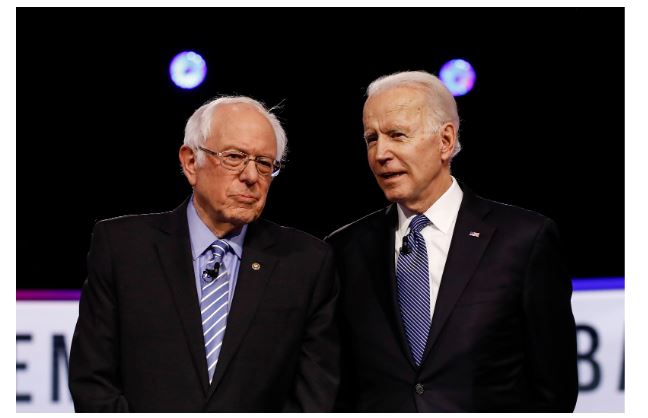
The global COVID-19 pandemic has become a central part of everyone’s daily life, so it is no wonder that the crisis has affected political strategies. In March, it appeared that a splintering Democratic party would make unseating Trump a nearly impossible task. As Super Tuesday came to an end, a battle between the moderate and progressive wings of the Democratic party, one between Joe Biden and Bernie Sanders, appeared only capable of producing a pyrrhic victory for one candidate and an inevitable loss in the general election. At the time, the divide between Biden’s proposed public option for healthcare and Sanders’s Medicare for all proposal, among other issues, seemed insurmountable. By April, Sanders was out of the primary race (much earlier than his exit in the 2016 election), and progressive Bernie supporters slowly began to rally around Biden.
According to political expert David Damore, “As the saliency of the epidemic began to increase, there seemed to be a collective sense among Democratic primary voters that the party needed a nominee with experience and moderation who could win in the swing states in November, and of the remaining candidates, Biden best filled the bill.”
COVID-19 has also given Democrats a chance to go all-in on healthcare, a strategy which worked well in the party’s 2018 campaign and pushed Democrats into the House majority. Democrats could seek to use the coronavirus to capitalize on the deep flaws in America’s healthcare system and present themselves as the party which will provide affordable healthcare to all, regardless of income or employment.
For Trump’s campaign, COVID-19 has presented an array of challenges. Most notably, Trump will no longer be able to run on a strong economy and instead will have to rely on public approval of his response to COVID-19. However, both data and political analyses do not paint a clear picture of what public approval will look like in November. While Washington Post and ABC News polling data in April gave Trump his highest ever job approval rating of 48/46, more recent data from YouGov gives Trump an approval rating closer to 41/55. Even more divided are political analysts, with some believing that the coronavirus is the “last straw” for reluctant Trump Supporters, and others (such as Michael Goodwin) supporting the notion that Trump will appear as a successful “war-time president’. With November four long months away, there is still a large degree of unpredictability surrounding what will be important come election day.
Politico’s David Siders writes, “The only certainty about the fall election, it seems, is more uncertainty about the state of the post-coronavirus political landscape.”
- Election Logistics
Voting is going to look different this year. Unless COVID-19 has miraculously subsided by November, in-person voting will not be feasible for the majority of states. The failed Wisconsin Primary exemplifies why in-person voting during a pandemic is clearly not an option. In early April, as the US COVID-19 death toll reached 10,000, states such as Alaska, Ohio, and Wyoming all delayed their presidential primary elections. However, Wisconsin, unwilling to sacrifice immediate democracy for safety, opted instead to hold in-person voting with less than ideal results; only 31% of the voting-eligible population turned up to the polls compared to the 49% turnout rate in the 2016 primary. Lines of people went on for blocks as only a few polling locations remained open, and the Wisconsin Department of Health Services found that the primary election directly caused at least 52 new cases of COVID-19 among poll workers and voters.
So what will the election look like, come November? Public interest is pointing towards an election with voting conducted by mail. Data in late April from the Pew Research Center reveals that 67% of Americans believe the coronavirus outbreak will significantly disrupt people’s ability to vote and 70% favor allowing any voter to vote by mail if they choose to. Even more illuminating is that 52% of Americans are in favor of conducting all elections by mail, which is up 18 percentage points from 2018.
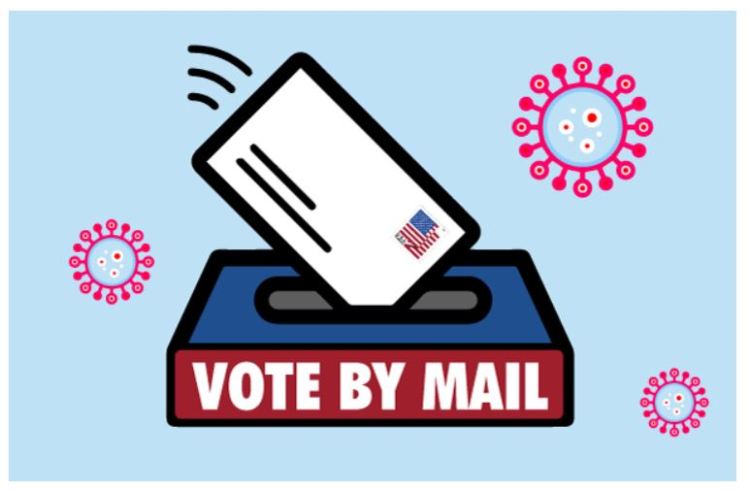
However, this policy does not have bipartisan support. The same Pew Research Center study finds that only 32% of Republicans favor all elections being held by mail, a group which President Trump falls in. Trump has repeatedly labeled voting by mail as “fraudulent” and “rigged,” urging his supporters to “get the facts about mail-in ballots.” With the logistics of the election becoming increasingly political, what the election will look like is still up in the air. Will the election be postponed? It’s possible; the latest election can constitutionally take place is December 31, 2020. And would Trump accept a defeat via a vote by mail election? It’s unlikely; a disputed election could be turbulent as protestors fight off a volley of Trump tweets and conservative talk show rants. If you listen to Biden, we are in a fight for the “soul of our nation.” But at this point, it is largely unclear when this fight will occur, how it will take place, and even what it will be about.
Sources:
- https://www.nytimes.com/2020/05/14/business/economy/coronavirus-unemployment-claims.html
- https://www.advisory.com/daily-briefing/2020/05/01/COVID-19-presidential-election
- https://fivethirtyeight.com/features/what-went-down-in-the-wisconsin-primary/
- https://www.newyorker.com/news/daily-comment/trumps-attack-on-voting-by-mail
- https://www.unlv.edu/news/release/quick-take-how-COVID-19-has-impacted-presidential-race
- https://www.pressandguide.com/news/how-COVID-19-could-affect-the-presidential-election/article_54042e52-864b-11ea-bb4a-7ffa84748b20.html
- https://www.advisory.com/daily-briefing/2020/05/01/COVID-19-presidential-election
- https://projects.fivethirtyeight.com/trump-approval-ratings/
- https://time.com/5829244/trump-voters-coronavirus-2020/
- https://nypost.com/2020/04/18/why-coronavirus-will-not-cost-trump-reelection-goodwin/
 The Academy Journal for Global Affairs