The Academy Journal Presents…
With a mission to inform and educate
– The Academy Journal
The Academy Journal for Global Affairs
Research and News Journal of BCA
With a mission to inform and educate
– The Academy Journal
By: Edward Welch Morgan

The United States Senate is an inherently undemocratic body that needs to be abolished. It is really that simple. Before I explain why this is the case, we need to get something out of the way: some of you may be feeling anger towards the suggestion to abolish half of Congress. Why? First, patriotic sentiments have the ability to obstruct constitutional change. Because a patriot personally identifies with their country by definition, many patriots will tacitly assume that their country is fine the way it is, out of an instinct of self-preservation. This assumption makes convincing many American patriots difficult—especially true with long-lasting, constitutional institutions like the Senate. Second, your race, political party, political views, and other groups that you identify with can impact your opinion on this issue, as debates about the Senate often center on how much power various groups should have.
My simple request is this: try to release all connections with any group you happen to identify with. Once we get our tribalist instincts, predispositions, and biases out of the way, we can discuss how an ideal government should be formed.
Why should the Senate be abolished? I previously used the word “undemocratic”, but for the sake of getting rid of labels, let’s identify the actual problem at hand: the US Senate allows some people to have more representation than other people.
MAJORITIES AND MINORITIES
A challenge with presenting this issue is that some people, especially those who benefit from this system, actually want this unbalanced representation. They argue that it is necessary to overrepresent some populations in order to allow smaller populations to have their opinions heard and represented in laws. If not, the smaller populations will constantly have their interests overridden to favor the interests of larger populations. This weakness is often called “the tyranny of the majority.”
However, the big problem with this line of thought is this principle can be flipped on its head. If the minority of the population has a majority of the representation, you have the same issue but in reverse: larger populations will constantly have their interests overridden to favor the interests of smaller populations. You could call this weakness the “tyranny of the minority.”
If you were forced to choose between a government plagued with the tyranny of the minority or with the tyranny of the majority, which would you choose? I would choose the latter, to preserve the interests of the maximum number of people. This is the whole premise of democracy.
Now, if we were to look at the Senate, does the tyranny of the minority ever appear? Let’s look at the 2019 Senate as an example. And once again, please ignore which political party you may be a part of for the meantime. Republicans had 53 seats, while Democrats had 47 seats. Although Democrats had a minority of the seats in the Senate [47%], they represented the majority [52%] of the American people. Even though it may seem like only a few percentage points, when you are talking about a country of 300 million people, percentage points add up. In 2019, Democratic senators represented over 12 million more people than Republican senators, yet had virtually no control over laws that were being passed or which laws would even be allowed to be voted on, due to being in the minority in the Senate.
As you can see, if there is any tyranny today, it is the majority of voters who are being tyrannized by the minority. But perhaps, you may argue, the minority of voters do need some sort of protection. And to be fair, different places have different needs. A program that may work for a big city like New York City might not work as effectively for a small town in Kansas. We don’t want to provide small towns unfair representation; as we saw previously, this just shifts the “tyranny” problem onto a different population. What we could do is let these regions have some level of control over their own local affairs–not enough control so that the whole concept of a country becomes useless, but enough to allow regions some level of flexibility. Do you know what I just described? I described local governments, something the United States already has.
THE GERRYMANDER
In our current era, there is much discussion about gerrymandering in the House of Representatives, where state officials can draw district lines to give specific groups more power. In the past, gerrymandering was used to give white people greater power. However, racial gerrymandering was made (explicitly) illegal with the Voting Rights Act of 1965 and subsequent Supreme Court cases, so gerrymandering is now used to give specific political parties more power. However, hardly anyone talks about the gerrymandering of the Senate, which gives both the Republican Party and white voters significantly more representation per capita than the Democratic Party and minority voters. This effect is engrained in the Senate through multitudes of scarcely populated rural states, and unless more Democratic and non-white states are formed, it will never self-correct.
But you might say that Republicans in Montana and Republicans in New York are just too different to be compared, and state boundaries are more important in categorizing voters’ wants. Let’s ignore the validity of this argument for a moment. If you want to compare representation by state instead of using nationwide demographics, the problem gets much, much worse. Let’s compare Wyoming, the least populous state, to California, the most populous state. Each state gets 2 senators, but Wyoming has 600,000 people, while California has almost 40 million people. This means that a California senator represents over 60 times the people that a Wyoming senator does. Why does a citizen in Wyoming deserve that much more power than a citizen in California? Aren’t all Americans supposed to be equal?
Perhaps one might argue that the purpose of the Senate is to represent the states and not the people in those states, and in this regard it is succeeding at its goal. But why would we want a government like that, especially today? First, I would argue that many state borders today are practically arbitrarily drawn. A person from New York City would probably have interests more in common with a person from Los Angeles than with someone from rural New York. But second, shouldn’t a national government represent its citizens equally, rather than representing some vague idea of the “states”? It isn’t like Senators aren’t elected by the state governments, they are elected by citizens. The Senate just represents citizens unequally, giving some citizens more power than others solely based on where they happen to live.
AN IDEAL SOLUTION AND A REALISTIC SOLUTION
So the natural solution is to abolish the Senate. There is no defense for the Senate that doesn’t rely on inequality, and if I have to convince you that equal representation is a good thing—I’m sorry, but you’re just completely lost.
But is abolishing the Senate politically feasible? Well at this point, no. The groups that benefit from it resist like their lives depend on it, and even some people who are actively harmed by the Senate still defend it. Why? Once again, blind patriotism presents an obstacle to constitutional change, and many of these patriotic sentiments are ingrained into Americans since childhood. American citizens think that holding on to the current version of the Constitution is their patriotic duty, even when it is deeply, deeply flawed. Thirdly, the requirements needed to change the Constitution render it practically impossible. To even propose a constitutional amendment, you need a two-thirds vote from either both the House and the Senate (yes I know), or two-thirds of the states.
If we cannot abolish the Senate, is there anything we can do? Yes, we can make more states, ones specifically designed to align the Senate with the national population as much as possible. As stated in Article IV of the Constitution, all that is required to make a new state is the consent of Congress, and in the case of splitting states, the additional consent of the state legislature of the states impacted.
We can start by making Washington DC a state, since its 700,000 citizens currently don’t have representation in Congress at all and are strongly in favor of becoming a state. We could also make Puerto Rico a state, but we first need to make sure that its three million citizens would be in favor of such a change; the same goes for other territories.
We can also split some states up. For example, we could split up California into multiple states. Not all of these states would have to be Democratic, but the state is so reliably blue that we could split it up and end up with more reliably blue states at the end. We could also split up more conservative states with liberal regions, like Florida. All we would need is the support of Florida’s state legislature and the support of Congress. Ideally, we could also combine multiple smaller states—like combining North and South Dakota to make one larger Mega-Dakota—but the chance that their state legislatures would agree is slim to none.
Of course, these proposed measures would have larger consequences than just changing the Senate. State governments would be altered in the most fundamental of ways. That’s why these measures would need to be completed both with caution and with the consent of the people living in those regions. We also don’t want this to turn into a power grab. The goal of creating new states is to provide equal representation to American citizens. In fact, even though more liberal states would have to be created, places like Northern California, conservative regions of large liberal states, could have states of their own as well.
Making new states won’t solve all the problems with the Senate. No matter what, there will always be discrepancies between the national population and the representation in the Senate. And because state populations change and demographics shift, borders drawn today will likely grow more unrepresentative as time progresses. But if we do decide to make more states, not only could Americans have state governments they are happier with, we could partially balance power in our government without even needing a constitutional amendment.
CONCLUSION
I’m not promising these sweeping changes are going to be easy to accomplish, or even that they will be an easy sell to American citizens. Looking at the road ahead, you might ask why it’s worth all the trouble just to give the Blue Team more power. But this isn’t about whether you like the Blue Team, or the Red Team, or the Green Team, or no team at all. It’s about allowing every citizen to have an equal voice in forming the laws that they have to follow. Because that is what democracies and republics are for.
SOURCES
https://www.vox.com/policy-and-politics/2019/12/17/21011079/senate-bias-2020-data-for-progress
By: Veronica Baladi
When many Americans think of the word “leprechaun,” a red-haired, jumpy little man with a ditzy four-leaf-clover and pot of gold usually comes to mind – not a transglobal economic crisis that affects their daily lives. But what do leprechauns have to do with the economy?
Over in Ireland, a land notorious for its leprechauns and low tax rates on corporate profits (tax havens), many multinational companies have been incentivized to expand across the pond. As a result, Ireland’s GDP skyrocketed a staggering 26.3% in 2015, leading the world to believe it was by the grace of the leprechauns – though high rises in GDP are generally healthy indicators, this gush was not all rainbows. The growth, sounding so promising to the public, was artificial. In actuality, a creative use of accounting and an avoidance of taxes occurred instead of an actual surgence of revenue and productivity – particularly by conglomerate Apple, Inc. In other words, Apple avoided billions in tax through the agreed cover of Irish GDP, ironically not having a single physical Apple store in Ireland. Both Apple and Ireland weren in hot water with the United Nations and the rest of the world. Nobel Prize-holding economist Paul Krugman has dubbed this phenomenon “leprechaun economics.”
Though Ireland’s 2016 scandal is in the past, they have since been blacklisted by the European Union and very much consider the term offensive, this umbrella term has come to encompass distorted, hyperinflated data. However, the United States is certainly experiencing some uncorrelated leprechaun effects itself. US multinational corporations are masters of deception, citing massive business in otherwise obscure tax havens. President Biden’s hopes to introduce the Made In America Tax Plan reclaim revenue lost as a result of similar tax-relocation-shenanigans. To put it briefly, the plan is an attempt to promote a fairer, more enforced tax system by raising taxes on corporate income tax while promoting in-house, domestic operations. This way, massive companies are less enticed by tax havens, while the government earns a projected $2 trillion more. This new plan does not merely regulate proper accounting on the big corporations: the basis is to create new jobs for any American and actually restore economic production.
By restructuring the fundamental basis of taxes – incentivizing outside investors by inversely raising taxes and having educated experts to enforce these changes – administration is hoping to encourage lawful, due change and regain a handle on actually earning their taxes. In theory, it sounds like a path to a more economically transparent world. But, leprechaun economics have shown us that not all companies are aligned with this common vision. The past may shine a light on the nuances of passing this costly venture. Companies like Apple have gone to extreme lengths, such as far as somewhat successfully conspiring with the Irish government, to flat-out avoid taxes. Who’s to say they will not continue to do the same?
Works Cited
Accounting, Thomson Reuters Tax &. “Treasury Department Reports on President Biden’s ‘Made in
America Tax Plan.’” Thomson Reuters Tax & Accounting News, 12 May 2021,
tax.thomsonreuters.com/news/treasury-department-reports-on-president-bidens-made-in-america-
tax-plan-2/.
Bowers, Simon. “Apple’s Cash Mountain, How It Avoids Tax, and the Irish Link.” The Irish Times, The
Irish Times, 6 Nov. 2017,
Desk, News. “Keiser Report: Leprechaun Economics (E965).” The Global Herald, 10 Sept. 2016,
theglobalherald.com/news/keiser-report-leprechaun-economics-e965/.
Krugman, Paul. “Biden, Yellen and the War on Leprechauns.” The New York Times, The New York
Times, 8 Apr. 2021, http://www.nytimes.com/2021/04/08/opinion/biden-corporate-taxes.html.
“Leprechaun Economics.” Owlapps, http://www.owlapps.net/owlapps_apps/articles?id=51127636&lang=en.
By: Veronica Baladi
Bill Gates and his divorce with Melinda have been headline news for quite some time. With emerging allegations of adultery and heinous association with Jeffrey Epstein, Gates’ good-guy, geeky facade has been questioned. Since all of this news, one can only wonder, what is the fate of his baby?

No, no, not his biological children… As far as the press knows, they are alive and well.
The baby in question is his original brainchild: Microsoft, Inc.
Though Bill Gates resigned from day-to-day operations of Microsoft in 2008, his presence is indubitably forever linked to the brand. After all, he owns 1.34% of the company and is one of the largest shareholders with more than 100,000 Microsoft shares.
Usually, the end of a partnership as powerful as the Gates’ may induce a lack of confidence among shareholders – this often equates to devastating effects on those very shares. In terms of actual performance of the company, this monumental announcement did not have any discernible impact on the performance of Microsoft. As of May 3, the very date when the announcement of divorce broke out, stock only dipped 0.13%. In the week that followed, stock remained at a net change of +0.11%. There was virtually no fluctuation despite the supposed taboo nature of divorce.
A company as volatile as Microsoft is often influenced by these external factors, and to see that consumers are unfazed by such a personal catastrophe is a relief. The most private issues can have the most public influence. However, after a similarly noteworthy divorce between Amazon figurehead Jeff Bezos and his wife, company performance also stayed relatively neutral. Perhaps divorce is just becoming normalized in the business world, and is no longer a cause for mass hysteria.
Works Cited
“Microsoft Historical Price Data (MSFT).” Investing.com,
http://www.investing.com/equities/microsoft-corp-historical-data.
Snider, Mike. “Microsoft Co-Founder Bill Gates, Wife Melinda Gates, Announce Divorce after
27-Year Marriage.” USA Today, Gannett Satellite Information Network, 4 May 2021,
Sonnemaker, Tyler. “All the Times Bill Gates Reportedly Engaged in Questionable Conduct
before He and Melinda Gates Announced Their Divorce.” Business Insider, Business
Insider, 21 May 2021, http://www.businessinsider.com/bill-gates-harassment-inappropriate-conduct-women-microsoft-jeffrey-epstein-2021-5.
“When Rich People Divorce: What Does the Future Hold for Bill and Melinda Gates?” The
Guardian, Guardian News and Media, 23 May 2021,
http://www.theguardian.com/us-news/2021/may/23/bill-gates-melinda-divorce-gates-foundation.
By: Alexxa Rojas
On the first day of pride month, Florida Governor Ron DeSantis signed a bill banning female transgender students from participating in public school sports teams. In accordance with the bill, DeSantis claimed, “We believe that it’s very important that the integrity of those competitions are preserved, that these opportunities are protected, and I can tell you this: In Florida, girls are going to play girl sports and boys are going to play boy sports.” Under the bill, public secondary school and college sports teams are required to be designated based on “biological sex.”
One’s ‘sex’ refers to their physiology, while their gender expression is a much more innate and intricate sense of identity. Assigned sex is a label that you’re given at birth based on medical factors, including your hormones, chromosomes, and genitals. What you are assigned at birth has little to do with one’s identity, nor any “physical advantage” politicians claim transgender individuals may have.
DeSantis, and many others sharing his perspective, fail to understand the nuances of gender and sex, as well as the lack of foundation in bills like these. DeSantis claims, “It’s not a message to anything other than saying we’re going to protect fairness in women’s sports.” Many bills or policies which exclude transgender individuals from participating, whether this is through sports or the military, believe that there is an ‘unfair physical advantage’ to allowing transgender participation. However, there is actually no scientific foundation to these claims. According to the International Federation of Sports Medicine (IFSM), there is a lack of data to support any physical advantages of trans athletes.
Florida has become the eighth state to enact a sports ban of this nature, accompanied by South Dakota, Mississippi, Arkansas, Tennessee, West Virginia, Montana, and Alabama. As more and more countries continue to participate in this harmful anti-LGBTQ rhetoric and mindsets, they actively promote exclusivity and prevent opportunities for transgender individuals all over America. As summed up by Orlando Gonzales, the executive director of SAVE, a South Florida gay rights advocacy group, during a news conference, “This is really just to throw red meat out there to really rally the base of people who are anti-LGBT.”
https://www.cnn.com/2021/06/01/politics/florida-transgender-sports-ban-ron-desantis/index.html
By: Lauren Vergos
Since the beginning of the global COVID-19 pandemic in March 2020, social media has played a vital role in almost all of our lives. While it has always functioned as a means of communication and relaying information to others, social media gained an entirely new meaning during the pandemic. From communicating with each other during periods of isolation to raising awareness about important current events, social media has played an integral role in our society.
For India’s COVID-19 crisis, social media has been especially beneficial. For months, the country’s healthcare system has been completely overwhelmed by an unprecedented Covid surge. The population suffers from around 400,000 new cases and thousands of deaths from the virus daily. Hospitals have been at maximum capacities, and it’s extremely difficult for people to access the care that they need.
In hopes of positive change, relatives and friends of those affected started using social media as a way to raise awareness about the crisis in India and call on others for help. Through social media platforms, these calls have reached politicians, doctors, lawyers, engineers, and many others who have then mobilized to help those in India with the virus. Together, they have formed grass-roots organizations that work both online and in person to help the cause. One example of an organization helping India is the Indian National Congress party’s youth league. Much of their work involves transporting oxygen and ventilators, which are extremely scarce. They currently have a team of 1,000 volunteers in Delhi, the center of the outbreak.
Many people involved in the effort to help India in its crisis have credited social media as the driving force behind the global movement. If not for social media, it’s unlikely that so many people would work to help India on such a large scale and short amount of time.
Delivering oxygen tanks to sick patients in India.
By: Neha Vazarkar
The coronavirus pandemic, which has now spread to over 185 countries and has more than 8 million cases, has hit the world hard and has many analyzing its costs on the economy. The United States economy is struggling to recover from months of being almost shut down and dealing with the effects of the delayed government response to the virus. Many stores have taken a turn for the worse and have been forced to close due to financial struggles, and as the pandemic continues, more stores could go “in the red.” As states have begun to reopen in the past month, many expect the economy to improve. And while signs of improvement are definitely visible there is still a long way to go. New spikes in cases threaten to bring about a second wave that could lengthen the negative impacts of COVID-19 on the economy even further.
To get a good understanding of the status of the economy, it is important to understand what has already happened due to the coronavirus. The number of unemployed people in the United States has jumped, ending the 11-year “bull economy” that began following the 2008 financial crisis. Total unemployment claims have hit over 45 million since March, with 1.5 million people applying in the week of June 14 – 21. While unemployment percentages have decreased slightly from April to May, the potential of a second wave has reinstated fears that the decrease is not permanent. According to the International Monetary Fund (IMF), the global economy is expected to shrink by 3% this year, signaling a potential recession. However, if the coronavirus situation significantly improves in the second half of the year, the IMF expects that global growth in 2021 could be 5.8% as things reopen and the economy strengthens.
One of the largest impacts of the coronavirus is the shift in mentality on globalization. For decades, countries have begun to trade more and more with each other, becoming more reliant on other nations to supply necessities. Leaders have historically felt that if there had been an issue in their country, they could always count on other countries to supply them with the goods that they needed. The coronavirus changed that viewpoint drastically. Overnight, countries were left to fend for themselves in a world in which countries saved supplies for their own people. Especially in the United States, hospitals struggled with getting enough masks and ventilators, worsening the situation. The world has clearly learned that it is not always possible to depend on the world as a solution to internal problems.
As for when the economy will be able to fully recover, there is nothing but uncertainty. The chairman of the Federal Reserve, Jerome Powell stated that he believed the economy would only be able to make a full recovery when herd immunity was established either through enough people getting infected or through a vaccine. Based on the number of OpenTable bookings since May, it is clear that while states are opening up, people are still unsure of eating and going outside, and this uncertainty could last for months. Many families have been victims of unemployment and large hospital bills as a result of the virus, and as a result, might limit their spending to regain a “cash cushion” to fall back on if there are more financial struggles. It is important to realize that eventually, people will learn to live with the virus in some way if it continues, and life will return to normal as the virus “slips into the background.” The economy is expected to recover much faster than during the 2008 financial crisis because there is no fundamental issue with the economy but rather a health issue that has prevented the economy from functioning regularly.
Overall, the coronavirus has taught many lessons about the economy to world leaders and regular people, from learning to create better and more efficient supply chains to knowing when and how to shut down the economy to save lives. Hopefully, as a result of the lessons learned, we will be much more prepared to face a crisis like this in the future.
By: Jacob Mitovich
At the March 15th, 2020, Democratic primary debate between former vice president Joe Biden and Senator Bernie Sanders, Biden made headlines when he committed to choosing a woman to be his vice president if elected president (Sullivan). In the history of our country, no woman has ever been vice president, and only two women have been vice-presidential nominees of a major political party (representative Geraldine Ferraro and former Alaska governor Sarah Palin). A woman vice president would be historic and would hopefully ensure that women’s issues are advocated for during a Biden presidency. In addition, in terms of an electoral strategy, Biden’s decision helps offset the criticism he has received by many with regard to accusations of sexual harassment.
Biden has yet to announce his running mate, but there are several contenders who many believe are being considered, including Michigan governor Gretchen Whitmer, Senators Elizabeth Warren and Kamala Harris, former Georgia state representative Stacey Abrams, and representative Val Demings of Florida.
Whitmer has been the governor of Michigan since 2019 and was a state legislator before that. A progressive, she has tried to enact a progressive agenda but has faced resistance from the Republican-controlled legislature (Alberta). More recently, she has garnered attention for her response to the coronavirus (COVID-19) pandemic, where she shut down the state early on. She has been targeted by President Trump, who has criticized her efforts and called her “that woman from Michigan”, but boasts high approval numbers from her constituents. In addition, Whitmer gave the official Democratic response to Trump’s 2020 State of the Union in February.
Whitmer has discussed the matter of being selected for VP with Biden’s campaign (Phillips), and in April, Biden spoke very favorably of her in his podcast. In the 2018 gubernatorial election, she won by 10 points, improving from 2016 nominee Hillary Clinton in Detroit’s highly educated suburbs as well as in blue-collar and rural counties that Trump did well in. Some believe that a Whitmer running mate could help Biden carry the midwest, but I would argue that Biden does not need much help in this category, as he connects pretty well with midwestern voters. I do, however, think that Whitmer would appeal to suburban women voters who disapprove of Trump’s misogyny and conduct. Many argue that Biden’s VP pick must connect with voters of color and/or younger voters to ensure a Biden victory. It is unclear as to whether Whitmer would motivate these groups.
Elizabeth Warren is another contender for the VP slot. A senator from Massachusetts since 2013, she has fought for a progressive economic agenda. Before she was a senator, she helped set up the Consumer Financial Protection Bureau in order to help protect consumers from the practices of banking institutions (Dovere). She ran for president in 2020 and became known for her detailed plans to fix America’s problems. However, she dropped out after Super Tuesday, unable to win progressives devoted to Bernie Sanders and moderates wary of her progressive reputation. Many believe that she would help Biden win over younger voters. Even though some Sanders supporters think Warren’s candidacy prevented Sanders from winning the nomination and therefore dislike her, 62% of Our Revolution members surveyed want her to be Biden’s running mate (Dovere). If the Biden campaign believes his victory rests on winning younger, progressive voters ambivalent about his moderation, then Warren would be a good pick. But if they believe wooing moderates turned off by Trump would help them win, then she wouldn’t.
Perhaps the most likely choice for VP is Kamala Harris. Harris has been a senator from California since 2017, and before that she was California’s Attorney General. She ran for president in 2020 but did not gain enough traction among voters. She performed poorly in polls with African American voters. Even after attacking Biden for opposing busing at the first Democratic primary debate last June, African Americans remained loyal to Biden. Many African Americans have also been critical of Harris’ record as a tough-on-crime prosecutor (King). Biden’s allies were critical of her attacks on Biden throughout the campaign, but many have come around and forgiven her. As of now, she seems to have the biggest support among Democratic party insiders. However, she is still a polarizing figure, and it is unclear what she will add to the ticket beyond her ability to respond to Trump’s attacks and actions.
Many would like Biden to choose a black woman to be his running mate. Not only is Harris in consideration, but Stacey Abrams is, too. Formerly Georgia’s state house minority leader, she ran for governor in 2018 but lost to Secretary of State Brian Kemp. Still, she improved upon Clinton’s 2016 performance by motivating African Americans and Latinos to vote as well as doing well in Atlanta’s college-educated and diversifying suburbs. She received media attention when she initially refused to concede to Kemp, alleging voter suppression throughout the election (Shah). Indeed, in the months and years preceding the election, Kemp purged hundreds of thousands of voters from the voter rolls who had not voted in recent elections, which were disproportionately young and African American. And right before the election, Kemp was sued for his use of the “exact match” policy, in which he did not approve voter registrations applications whose information did not exactly match information from other databases (Shah).
Abrams has also attracted attention in recent weeks for openly stating her desire to be Biden’s running mate; traditionally, prospective vice presidents never openly campaign for the role (Leibovich). In an April Meet the Press appearance, she stated that she was willing to serve (Wagtendonk). Her reasoning is that as a black woman, one must raise their hand in order to be seen. I think Abrams has a respectable resume, but I cannot get over the fact that she has never served in any branch of the federal government. I believe a vice president must have experience either in Congress or working with Congress in order to effectively do the job. Still, I admit that she could be a good addition to the ticket, as her 2018 performance shows she can expand and motivate the Democrats’ coalition.
Often, prospective vice-presidential candidates are well-known senators or governors, but sometimes they are less well-known. Congresswoman Val Demings of Florida, first elected in 2016, is reportedly on Biden’s VP shortlist (Caputo). Demings is most well-known for her role as a House impeachment manager during the impeachment hearings earlier this year. Before Congress, she served as Orlando’s police chief, where she presided over a drop in violent crime yet incidences of police brutality (Caputo). An African American, she could energize the African-American base, but like Harris, she could be dogged by her past record with the African American community. She is, for sure, a dark horse candidate. It’s unlikely Biden will choose her to be his running mate, but she is clearly in consideration.
Whitmer, Warren, Harris, Abrams, and Demings would all add to the Democratic ticket if selected to be Biden’s running mate; however, their records can be scrutinized to create a bad picture. To me, Harris seems to be the most likely pick, followed by Whitmer and Warren.
Sources:
Alberta, Tim. “’The Woman in Michigan’ Goes National.” POLITICO, 9 Apr. 2020, http://www.politico.com/news/magazine/2020/04/09/gretchen-whitmer-governor-michigan-profile-2020-coronavirus-biden-vp-177791.
Cadelago, Christopher, and Natasha Korecki. “Kamala Emerges as Early Biden VP Favorite as Sting of Debate Attack Fades.” POLITICO, 10 May 2020, http://www.politico.com/news/2020/05/10/kamala-harris-early-biden-vice-president-favorite-248615.
Caputo, Marc. “Val Demings’ Stock Rises on VP Shortlist.” POLITICO, 17 May 2020, http://www.politico.com/news/2020/05/17/val-demings-joe-biden-vice-president-shortlist-262066.
Dovere, Edward-Isaac. “It Really Could Be Warren.” The Atlantic, Atlantic Media Company, 15 May 2020, http://www.theatlantic.com/politics/archive/2020/05/elizabeth-warren-biden-vice-president/611497/.
King, Maya. “Why Black Voters Never Flocked to Kamala Harris.” POLITICO, 4 Dec. 2019, http://www.politico.com/news/2019/12/04/kamala-harris-black-voters-2020-075651.
Leibovich, Mark. “The End of ‘Who Me? For V.P.?’ Politics.” The New York Times, The New York Times, 19 May 2020, http://www.nytimes.com/2020/05/19/us/politics/biden-vice-president-trump.html.
“Michigan Governor Election Results.” The New York Times, The New York Times, 2018, http://www.nytimes.com/elections/results/michigan-governor.
Phillips, Morgan. “Michigan Gov. Gretchen Whitmer Says She’s Had ‘Opening Conversation’ with Biden Campaign on VP Search.” Fox News, FOX News Network, 19 May 2020, http://www.foxnews.com/politics/michigan-gov-gretchen-whitmer-says-shes-had-opening-conversation-with-biden-campaign-on-vp-search.
Shah, Khushbu. “’Textbook Voter Suppression’: Georgia’s Bitter Election a Battle Years in the Making.” The Guardian, Guardian News and Media, 10 Nov. 2018, http://www.theguardian.com/us-news/2018/nov/10/georgia-election-recount-stacey-abrams-brian-kemp.
Sullivan, Kate. “Biden Says He Will Pick Woman to Be His Vice President.” CNN, Cable News Network, 16 Mar. 2020, www.cnn.com/2020/03/15/politics/joe-biden-woman-vice-president/index.html.
Wagtendonk, Anya van. “Stacey Abrams Makes the Case for Herself as Biden’s VP Pick.” Vox, Vox, 26 Apr. 2020, http://www.vox.com/2020/4/26/21237468/stacey-abrams-why-should-be-biden-vp-pick.
Wikipedia Editors. “List of Female United States Presidential and Vice-Presidential Candidates.” Wikipedia, Wikimedia Foundation, 22 June 2020, en.wikipedia.org/wiki/List_of_female_United_States_presidential_and_vice-presidential_candidates#Vice-presidential_candidates.
Wikipedia Editors. “Stacey Abrams.” Wikipedia, Wikimedia Foundation, 23 June 2020, en.wikipedia.org/wiki/Stacey_Abrams.
By: Harnoor Sachar
After the murders of Ahmaud Arbery, Breonna Taylor, George Floyd, and a series of unjustified and unaddressed killings in the past decades, the black community and allies have come together to form what is now known as the largest worldwide civil rights movement in history. While the Black Lives Matter movement mirrors some of the approaches of the civil rights movement led by Martin Luther King Jr in the fifties and sixties, there is a significant 21st-century aspect that has allowed it to grow on a global scale: the use of media.
There are various forms of media, unique to modern times, that have exponentially increased the impact of the Black Lives Matter movement, one of the most important being social media platforms such as Instagram and Tik Tok. Currently, 60% of US TikTok users are aged between 16-24, according to a November 2019 release from Reuters, and Statista released a study indicating that 36% of Instagram users are between the ages of 13 and 24. Considering these age demographics, not only did the movement gain large support on popular platforms, but it also exposed and involved the younger generation much more than previous efforts.
While a slightly younger demographic does not necessarily change the meaning of the movement, it has a significant impact on the way information is disseminated, and who is involved in the revolution. 90% of a surveyed 39,000 young Americans, referred to as “Generation Z”, acknowledge the black minority crisis, and 80% have used their social media platform to post and spread awareness about the issue (Business Insider). Part of this increased involvement has to do with the way racial tensions have impacted students. Many students admit that the movement has affected their mental health and they are using resources to better educate themselves on minority history and look into open cases of police brutality. This is yet another example of the way modern media has changed the way civil rights movements proceed. With millions of articles, biographies, and news outlets available to the public at the click of a button, and limited censorship within many of those sources, people can access real and raw information much faster.
Not only is the spread of activism and information faster, but activists also have better access to connections and a community in which they feel more comfortable expressing their true views on the issue (Harvard International Review). For many, this means being able to come out of a generalized or stereotypical home environment and formulate their own opinions.
On the other hand, because social platforms are so open to use and available to people of various perspectives, they have also become a prime location of black slandering and harassment. While the videos of police brutality and mistreatment are becoming viral, the comments and debates coming along with them represent two polarized views. Harassment and insults are common to media activism regardless of the topic in hand, but they tend to amplify and the discussion approaches race. That being said, in the fifties and sixties, bringing hate to late was one of the prime approaches to addressing it, and by having recorded evidence of hate speech, activists can fuel the movement’s initiative (Wired).
With all of that being said, it has become more evident than ever that we are dealing with a new kind of movement and we must make the most of the ability we have to further it. As scholars have noted, partly due to its “public sphere” nature, social media creates participation opportunities—such as boosting protest turnout or supporting fundraising campaigns—that broaden mobilization, thus helping scale movement endeavors. As active citizens, we have free access to this public square and are thus fully capable of speaking out and participating in this revolution to bring justice to the many black lives lost and years of systematic racism in our history.
Sources:
https://www.statista.com/statistics/325587/instagram-global-age-group/
https://www.businessinsider.com/how-gen-z-feels-about-george-floyd-protests-2020-6
https://digital.lib.washington.edu/researchworks/handle/1773/25133
https://www.wired.com/2015/10/how-black-lives-matter-uses-social-media-to-fight-the-power/
By: Ethan Donovan
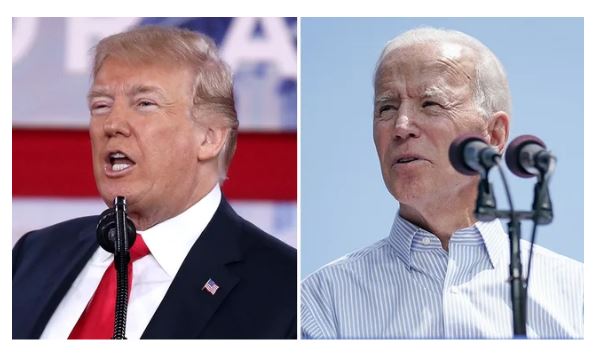
If you have watched the Youtube ads of presumptive Democratic Presidential nominee Joe Biden telling us the “soul of our nation” is at risk, or have seen images of the depressing turnout at Trump’s Tulsa rally, you know the 2020 election is a bit different from the rest. Four months ago, as Joe Biden’s campaign found new energy on Super Tuesday, it appeared that the 2020 election would be about healthcare, taxes, and the inevitable gaffs from Trump and Biden. Flash forward three months and the election has transformed: 36 million people are unemployed, leaving one’s home is a constant comparison of pros and cons, and the debate over reopening the country rages amongst political leaders and family members at the dinner table. The COVID-19 crisis has undoubtedly changed the course of the 2020 presidential election in two areas: key issues and election logistics.
The global COVID-19 pandemic has become a central part of everyone’s daily life, so it is no wonder that the crisis has affected political strategies. In March, it appeared that a splintering Democratic party would make unseating Trump a nearly impossible task. As Super Tuesday came to an end, a battle between the moderate and progressive wings of the Democratic party, one between Joe Biden and Bernie Sanders, appeared only capable of producing a pyrrhic victory for one candidate and an inevitable loss in the general election. At the time, the divide between Biden’s proposed public option for healthcare and Sanders’s Medicare for all proposal, among other issues, seemed insurmountable. By April, Sanders was out of the primary race (much earlier than his exit in the 2016 election), and progressive Bernie supporters slowly began to rally around Biden.
According to political expert David Damore, “As the saliency of the epidemic began to increase, there seemed to be a collective sense among Democratic primary voters that the party needed a nominee with experience and moderation who could win in the swing states in November, and of the remaining candidates, Biden best filled the bill.”
COVID-19 has also given Democrats a chance to go all-in on healthcare, a strategy which worked well in the party’s 2018 campaign and pushed Democrats into the House majority. Democrats could seek to use the coronavirus to capitalize on the deep flaws in America’s healthcare system and present themselves as the party which will provide affordable healthcare to all, regardless of income or employment.
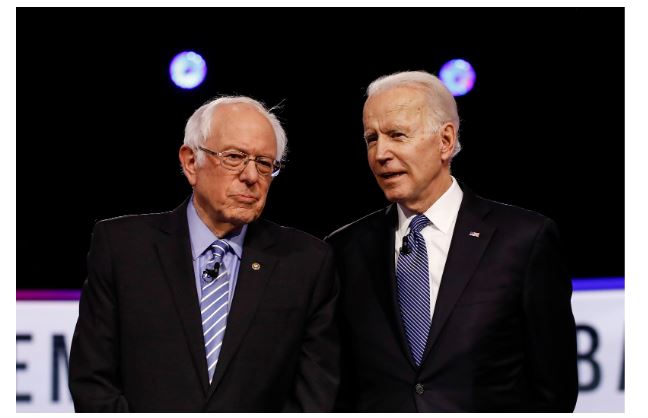
For Trump’s campaign, COVID-19 has presented an array of challenges. Most notably, Trump will no longer be able to run on a strong economy and instead will have to rely on public approval of his response to COVID-19. However, both data and political analyses do not paint a clear picture of what public approval will look like in November. While Washington Post and ABC News polling data in April gave Trump his highest ever job approval rating of 48/46, more recent data from YouGov gives Trump an approval rating closer to 41/55. Even more divided are political analysts, with some believing that the coronavirus is the “last straw” for reluctant Trump Supporters, and others (such as Michael Goodwin) supporting the notion that Trump will appear as a successful “war-time president’. With November four long months away, there is still a large degree of unpredictability surrounding what will be important come election day.
Politico’s David Siders writes, “The only certainty about the fall election, it seems, is more uncertainty about the state of the post-coronavirus political landscape.”
Voting is going to look different this year. Unless COVID-19 has miraculously subsided by November, in-person voting will not be feasible for the majority of states. The failed Wisconsin Primary exemplifies why in-person voting during a pandemic is clearly not an option. In early April, as the US COVID-19 death toll reached 10,000, states such as Alaska, Ohio, and Wyoming all delayed their presidential primary elections. However, Wisconsin, unwilling to sacrifice immediate democracy for safety, opted instead to hold in-person voting with less than ideal results; only 31% of the voting-eligible population turned up to the polls compared to the 49% turnout rate in the 2016 primary. Lines of people went on for blocks as only a few polling locations remained open, and the Wisconsin Department of Health Services found that the primary election directly caused at least 52 new cases of COVID-19 among poll workers and voters.
So what will the election look like, come November? Public interest is pointing towards an election with voting conducted by mail. Data in late April from the Pew Research Center reveals that 67% of Americans believe the coronavirus outbreak will significantly disrupt people’s ability to vote and 70% favor allowing any voter to vote by mail if they choose to. Even more illuminating is that 52% of Americans are in favor of conducting all elections by mail, which is up 18 percentage points from 2018.
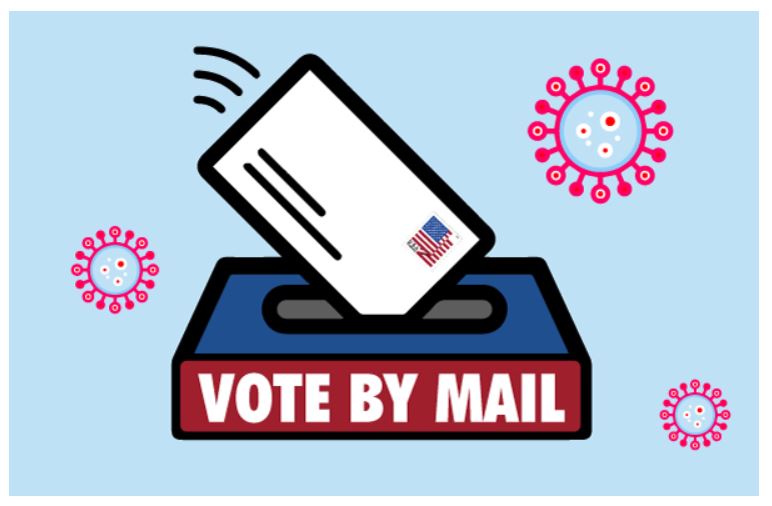
However, this policy does not have bipartisan support. The same Pew Research Center study finds that only 32% of Republicans favor all elections being held by mail, a group which President Trump falls in. Trump has repeatedly labeled voting by mail as “fraudulent” and “rigged,” urging his supporters to “get the facts about mail-in ballots.” With the logistics of the election becoming increasingly political, what the election will look like is still up in the air. Will the election be postponed? It’s possible; the latest election can constitutionally take place is December 31, 2020. And would Trump accept a defeat via a vote by mail election? It’s unlikely; a disputed election could be turbulent as protestors fight off a volley of Trump tweets and conservative talk show rants. If you listen to Biden, we are in a fight for the “soul of our nation.” But at this point, it is largely unclear when this fight will occur, how it will take place, and even what it will be about.
Sources:
By: Veronica Baladi
It’s no secret that COVID-19 is responsible for the downturn of companies, which were once major dominators. Household brands like Neiman Marcus, Gold’s Gym, and J. Crew cited the coronavirus as a reason for bankruptcy.
Though the pandemic has been responsible for the decline, struggles, and even extreme cases like bankruptcies for a myriad of businesses -from big names to smaller businesses- countless others are now prospering.
The most blatant, straightforward winners seem to be businesses in the cleaning industries. For example, Clorox is famous for its wipes, sanitizers, and such. Overall, Clorox skyrocketed 15% for the first quarter of 2020, which is correlated with the increasing need to sanitize. Mass media channels, whether it be the government or Hollywood A-Listers, are spreading information to wash hands, clean surfaces, and be extra careful. In order to do so more often, more supplies are needed. To obtain more supplies, people turn to these businesses and as such, they gain profit.
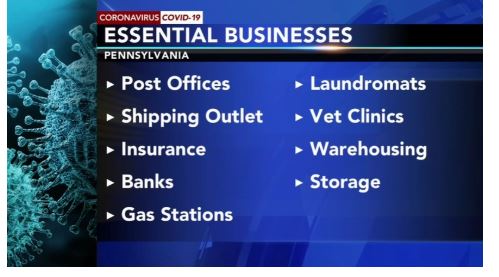
This affluence is not only limited to “essential” businesses. There are a great deal of non-essential businesses that are doing remarkably, which may strike one as surprising. For Electronic Arts, a mainstream video game company, their fourth-quarter revenue grew 12% compared with last year. Nintendo, particularly the Nintendo Switch, is also seeing massive success. Not only is the physical console seeing increased demand, but the newly made game “Animal Crossing: New Horizons” has shattered records, selling over 13 million units within its first six weeks of release.
Already a dominator in the streaming industry, Netflix has gained over 16 million new subscriptions in the first quarter of the year and that number is only surging upward. AllianceBernstein analyst Todd Juenger notes that this is favorable for the long term. If and when the pandemic, which is still in the unknown, people will be hesitant to terminate their loyalty to these somewhat pleasurable, addicting services. Though he says this in regards to Netflix, this may certainly apply to currently successful companies in the overall virtual entertainment industry, like Spotify, Hulu, and so on. Since people are seeking distraction during what may be an idle time in quarantine, they may begin to utilize these services. In turn, these companies all greatly benefit.
Zoom has also become a household staple during this time, even though it has existed for nine years. With only 10 million users in December of 2019, March 2020 saw 200 million users, which continued to surge to 300 million users in April 2020. In addition to its typical uses for a personal video call or conference call, Zoom is now being implemented in virtual school settings. With its Education plans, Zoom has a new niche, target audience for this indefinite time in shutdown. Even after social distancing is raised or if schools reopen, schools still may opt to continue to use Zoom if there is a circumstance that in-person interaction is not available. Zoom specifically is preferred to competing video calling services because of its simplicity, fun green screens, and smooth conferencing. The introduction of Zoom to a mainstream audience has opened an outlet for the future of Zoom to continue to expand and flourish.

These are just a few of the businesses and industries that are thriving, not including more traditionally recession-proof areas like food, now elevated due to the increased use of dine-in-home delivery with apps like Uber Eats; healthcare, since people who have access to will continue to retain their insurance; and the pharmaceutical area. As demands shift towards a more socially distanced society, so will the overall market. As a result, different niches of business will successfully emerge.
Citations:
Chappelow, Jim. “9 Businesses That Thrive in Recession.” Investopedia, Investopedia, 21 Apr. 2020, http://www.investopedia.com/financial-edge/0811/9-businesses-that-thrive-in-recession.aspx.
Pierce, David. “Zoom Conquered Video Chat – Now It Has Even Bigger Plans.” Protocol, Protocol, 11 May 2020, http://www.protocol.com/zoom-videoconferencing-history-profit.
STAFF. “Netflix Gets 16 Million New Sign-Ups Thanks to Lockdown.” BBC News, BBC, 22 Apr. 2020, http://www.bbc.com/news/business-52376022.
STAFF. “Zoom Revenue and Usage Statistics (2020).” Business of Apps, 23 June 2020, http://www.businessofapps.com/data/zoom-statistics/.
Swartz, Jon. “Netflix May Have Edge on Competition as Coronavirus Keeps People Looking for New Shows.” MarketWatch, MarketWatch, 2 May 2020, http://www.marketwatch.com/story/netflix-in-the-age-of-covid-19-streaming-pioneer-may-have-new-edge-on-competition-2020-04-07.
Tucker, Hank. “Coronavirus Bankruptcy Tracker: These Major Companies Are Failing Amid The Shutdown.” Forbes, Forbes Magazine, 26 June 2020, forbes.com/sites/hanktucker/2020/05/03/coronavirus-bankruptcy-tracker-these-major-companies-are-failing-amid-the-shutdown/#294ceece3425.
Valinsky, Jordan. “Business Is Booming for These 14 Companies during the Coronavirus Pandemic.” CNN, Cable News Network, 7 May 2020, http://www.cnn.com/2020/05/07/business/companies-thriving-coronavirus-pandemic/index.html.
“Video Conferencing, Web Conferencing, Webinars, Screen Sharing.” Zoom Video, 2020, zoom.us/education.


 The Academy Journal for Global Affairs